Our Christmas series this year was really an Easter series. In an effort to remind ourselves that the beauty and purpose of the manger is the cross, we focused on the famous last words of Jesus from Calvary. Below you will find each of the sermons as well as
the other articles and links associated with that series.
Sermons
October 30, 2016 | Luke 23:34: I Am Forgiven
November 13, 2016 | Luke 23:43: I Am Saved
November 27, 2016 | John 19:25-27: I Am Loved
December 4, 2016 | Mark 15:34: I Am Accepted
December 4, 2016 | Psalm 22
December 11, 2016 | John 19:28: I Am Satisfied
December 18, 2016 | John 19:30: I Am Victorious
December 25, 2016 | Luke 23:46: I Am Alive
Other Series
"Famous Last Words" Sermon Series
"What Does Theology Have to Do With the Price of Bread in China?" Sermon Series
"The Gospel According to Exodus" Sermon Series
"Roadblocks to Faith" Sermon Series
"The Beatitudes" Sermon Series
"The Gospel Is . . ." Sermon Series on Galatians

Showing posts with label cross. Show all posts
Showing posts with label cross. Show all posts
Friday, December 30, 2016

Thursday, December 29, 2016
Spurgeon on the Last Words of Jesus
Charles Spurgeon offers a helpful summary of the famous seven last words of Jesus from the cross:
Now concerning these seven cries from the Cross, many authors have drawn from them, lessons concerning seven duties. Listen. When our Lord said, “Father, forgive them,” in effect, He said to us, “Forgive your enemies.” Even when they despitefully use you and put you to terrible pain, be ready to pardon them! Be like the sandalwood tree which perfumes the axe that fells it. Be all gentleness, kindness and love—and be this your prayer, “Father, forgive them.”
The next duty is taken from the second cry, namely, that of penitence and faith in Christ, for He said to the dying thief, “Today shall you be with Me in Paradise.” Have you, like he, confessed your sin? Have you his faith and his prayerfulness? Then you shall be accepted even as he was! Learn, then, from the second cry, the duty of penitence and faith.
When our Lord, in the third cry, said to His mother, “Woman, behold your son!” He taught us the duty of filial love. No Christian must ever be short of love to his mother, his father, or to any of those who are endeared to him by relationships which God has appointed for us to observe. Oh, by the dying love of Christ to His mother, let no man here unman himself by forgetting his mother! She bore you—bear her in her old age and lovingly cherish her even to the last.
Jesus Christ’s fourth cry teaches us the duty of clinging to God and trusting in God—“My God, my God.” See how, with both hands, He takes hold of Him—“My God, My God, why have You forsaken Me?” He cannot bear to be left of God. All else causes Him but little pain compared with the anguish of being forsaken of His God. So learn to cling to God, to grip Him with a double-handed faith, and if you do ever think that He has forsaken you, cry after Him, and say, “Show me why You contend with me, for I cannot bear to be without You.”
The fifth cry, “I thirst,” teaches us to set a high value upon the fulfillment of God’s Word. “After this, Jesus knowing that all things were now accomplished, that the scripture might be fulfilled, said, I thirst.” Take good heed, in all your grief and weakness, to still preserve the Word of your God, and to obey the precept. Learn the doctrine and delight in the promise. As your Lord, in His great anguish said, “I thirst,” because it was written that so He would speak, have regard unto the Word of the Lord even in little things!
That sixth cry, “It is finished,” teaches us perfect obedience. Go through with your keeping of God’s Commandments. Leave out no Command, keep on obeying till you can say, “It is finished.” Work your lifework, obey your Master, suffer or serve according to His will, but rest not till you can say with your Lord, “It is finished.” “I have finished the work which You gave Me to do.”
And that last Word, “Father, into Your hands I commend My spirit,” teaches us resignation. Yield all things. Yield up even your spirit to God at His bidding. Stand still and make a full surrender to the Lord, and let this be your watchword from the first even to the last, “Into Your hands, my Father, I commend my spirit.” I think that this study of Christ’s last Words should interest you, therefore let me linger a little longer upon it. Those seven cries from the Cross also teach us something about the attributes and offices of our Master. They are seven windows of agate and gates of carbuncle through which you may see Him and approach Him. (Our Lord's Last Cry from the Cross)
Tuesday, December 27, 2016
December 25, 2016 | Luke 23:46: I Am Alive
Here is the final sermon in our 7-part series on the Famous Last Words of Jesus from the cross looking at Luke 23:46.
Audio
Notes
For more:
October 30, 2016 | Luke 23:34: I Am Forgiven
November 13, 2016 | Luke 23:43: I Am Saved
November 27, 2016 | John 19:25-27: I Am Loved
December 4, 2016 | Mark 15:34: I Am Accepted
December 4, 2016 | Psalm 22
December 11, 2016 | John 19:28: I Am Satisfied
December 18, 2016 | John 19:30: I Am Victorious
December 25, 2016 | Luke 23:46: I Am Alive
46 And Jesus, crying out with a loud voice, said, “Father, into Your hands I commit My spirit.” Having said this, He breathed His last.
Audio
Notes
For more:
October 30, 2016 | Luke 23:34: I Am Forgiven
November 13, 2016 | Luke 23:43: I Am Saved
November 27, 2016 | John 19:25-27: I Am Loved
December 4, 2016 | Mark 15:34: I Am Accepted
December 4, 2016 | Psalm 22
December 11, 2016 | John 19:28: I Am Satisfied
December 18, 2016 | John 19:30: I Am Victorious
December 25, 2016 | Luke 23:46: I Am Alive
Monday, December 19, 2016
December 18, 2016 | John 19:30: I Am Victorious
Here is the sermon from Sunday morning taken from John 19:30 looking at the sixth of the seven Famous Last Words of Jesus from the cross.
Audio
Notes
For more:
October 30, 2016 | Luke 23:34: I Am Forgiven
November 13, 2016 | Luke 23:43: I Am Saved
November 27, 2016 | John 19:25-27: I Am Loved
December 4, 2016 | Mark 15:34: I Am Accepted
December 4, 2016 | Psalm 22
December 11, 2016 | John 19:28: I Am Satisfied
December 18, 2016 | John 19:30: I Am Victorious
Therefore when Jesus had received the sour wine, He said, “It is finished!” And He bowed His head and gave up His spirit.
Audio
Notes
For more:
October 30, 2016 | Luke 23:34: I Am Forgiven
November 13, 2016 | Luke 23:43: I Am Saved
November 27, 2016 | John 19:25-27: I Am Loved
December 4, 2016 | Mark 15:34: I Am Accepted
December 4, 2016 | Psalm 22
December 11, 2016 | John 19:28: I Am Satisfied
December 18, 2016 | John 19:30: I Am Victorious
Monday, December 5, 2016
December 4, 2016 | Mark 15:34: I Am Accepted
Below you will find the sermon and notes from yesterday mornings sermon taken from Mark 15:34 on the fourth saying of Jesus from the cross.
Audio
Notes
For more:
October 30, 2016 | Luke 23:34: I Am Forgiven
November 13, 2016 | Luke 23:43: I Am Saved
November 27, 2016 | John 19:25-27: I Am Loved
December 4, 2016 | Mark 15:34: I Am Accepted
December 4, 2016 | Psalm 22
34 At the ninth hour Jesus cried out with a loud voice, “Eloi, Eloi, lama sabachthani?” which is translated, “My God, My God, why have You forsaken Me?”
Audio
Notes
For more:
October 30, 2016 | Luke 23:34: I Am Forgiven
November 13, 2016 | Luke 23:43: I Am Saved
November 27, 2016 | John 19:25-27: I Am Loved
December 4, 2016 | Mark 15:34: I Am Accepted
December 4, 2016 | Psalm 22
Thursday, December 1, 2016
November 27, 2016 | John 19:25-27: I Am Loved
Here is the sermon from Sunday morning taken from John 19:25-27 looking at the third saying from the cross.
Audio
Notes
For more:
October 30, 2016 | Luke 23:34: I Am Forgiven
November 13, 2016 | Luke 23:43: I Am Saved
November 27, 2016 | John 19:25-27: I Am Loved
25 Therefore the soldiers did these things.
But standing by the cross of Jesus were His mother, and His mother’s sister, Mary the wife of Clopas, and Mary Magdalene. 26 When Jesus then saw His mother, and the disciple whom He loved standing nearby, He *said to His mother, “Woman, behold, your son!” 27 Then He *said to the disciple, “Behold, your mother!” From that hour the disciple took her into his own household.
Audio
Notes
For more:
October 30, 2016 | Luke 23:34: I Am Forgiven
November 13, 2016 | Luke 23:43: I Am Saved
November 27, 2016 | John 19:25-27: I Am Loved
Tuesday, October 4, 2016
October 2, 2016 | Colossians 2:8-15; 1 Peter 2:21-25: Why the Atonement Matters, Part 1
Here is the sermon from Sunday morning taken from both Colossians 2:8-15 and 1 Peter 2:21-25:
Audio
Notes
For more:
September 4, 2016 | Ephesians 1:3-14: On Why the Trinity Matter, Part 1
September 4, 2016 | 2 Corinthians 12:4-31: On Why the Trinity Matter, Part 2
September 11, 2016 | Psalm 33:6-17: Why Creation Matters
September 18, 2016 | Romans 7:14-25: Why the Fall Matters
September 25, 2016 | 1 John 4:2-3: Why the Humanity of Jesus Matters
September 25, 2016 | John 1:1-5, 14-15: Why the Deity of Christ Matters
October 2, 2016 | Colossians 2:8-15; 1 Peter 2:21-25: Why the Atonement Matters, Part 1
If Yahweh, then Christ
12 Proofs of Jesus' Deity From the Synoptic Gospels
Colossians 2:8-15:
8 See to it that no one takes you captive through philosophy and empty deception, according to the tradition of men, according to the elementary principles of the world, rather than according to Christ. 9 For in Him all the fullness of Deity dwells in bodily form, 10 and in Him you have been made complete, and He is the head over all rule and authority; 11 and in Him you were also circumcised with a circumcision made without hands, in the removal of the body of the flesh by the circumcision of Christ; 12 having been buried with Him in baptism, in which you were also raised up with Him through faith in the working of God, who raised Him from the dead. 13 When you were dead in your transgressions and the uncircumcision of your flesh, He made you alive together with Him, having forgiven us all our transgressions, 14 having canceled out the certificate of debt consisting of decrees against us, which was hostile to us; and He has taken it out of the way, having nailed it to the cross. 15 When He had disarmed the rulers and authorities, He made a public display of them, having triumphed over them through Him.
1 Peter 2:21-25
21 For you have been called for this purpose, since Christ also suffered for you, leaving you an example for you to follow in His steps, 22 who committed no sin, nor was any deceit found in His mouth; 23 and while being reviled, He did not revile in return; while suffering, He uttered no threats, but kept entrusting Himself to Him who judges righteously; 24 and He Himself bore our sins in His body on the cross, so that we might die to sin and live to righteousness; for by His wounds you were healed. 25 For you were continually straying like sheep, but now you have returned to the Shepherd and Guardian of your souls.
Audio
Notes
For more:
September 4, 2016 | Ephesians 1:3-14: On Why the Trinity Matter, Part 1
September 4, 2016 | 2 Corinthians 12:4-31: On Why the Trinity Matter, Part 2
September 11, 2016 | Psalm 33:6-17: Why Creation Matters
September 18, 2016 | Romans 7:14-25: Why the Fall Matters
September 25, 2016 | 1 John 4:2-3: Why the Humanity of Jesus Matters
September 25, 2016 | John 1:1-5, 14-15: Why the Deity of Christ Matters
October 2, 2016 | Colossians 2:8-15; 1 Peter 2:21-25: Why the Atonement Matters, Part 1
If Yahweh, then Christ
12 Proofs of Jesus' Deity From the Synoptic Gospels
Monday, July 18, 2016
July 17, 2016 | 1 Corinthians 1:18-2:2: The Centrality of the Cross
Here is the sermon from Sunday morning taken from 1 Corinthians 1:18:2-2:
Audio
Notes
For more:
April 24, 2016 | Exodus 1:1-2:10: Your Best Slavery Now
May 1, 2016 | Exodus 2:11-4:17 - Your Rod and Your Staff They Deliver Me
May 15, 2016 | Exodus 4:18-7:7: When Pharaoh Tempts Me To Despair
May 22, 2016 | Exodus 7:8-10:29
May 31, 2016 | Exodus 11:1-13:16 - Gospel Forgotten is Gospel Forsaken
June 5, 2016 | Exodus 13:17-15:21: The Grace that Saves is the Same Grace that Sustains
June 12, 2016 | Exodus 15:22-17:7: Would You Like Some Cheese With That Whine? or Why the Gospel is Better than Our Appetites
July 3, 2016 | Exodus 17:8-18:27 - Help! I Need Somebody
July 10, 2016 | Exodus 19:1-20:21: (Thou Shalt Not) Walk Like an Egyptian
April 24, 2016 | Genesis 37-50: Joseph
May 1, 2016 | Psalm 23
May 31, 2016 | Salvation is Creation: A Theology of Revelation
June 5, 2016 | Ecclesiastes 1-2
June 12, 2016 | Number 20:1-13
June 26, 2016 | Matthew 14:13-33
June 26, 2016 | Matthew 15:29-39
July 3, 2016 | 1 Samuel 15: Partial Obedience is Just Another Term for Disobedience
July 16, 2016 | 1 Corinthians 1:18-2:2: The Centrality of the Cross
18 For the word of the cross is foolishness to those who are perishing, but to us who are being saved it is the power of God. 19 For it is written,
“I will destroy the wisdom of the wise,
And the cleverness of the clever I will set aside.”20 Where is the wise man? Where is the scribe? Where is the debater of this age? Has not God made foolish the wisdom of the world? 21 For since in the wisdom of God the world through its wisdom did not come to know God, God was well-pleased through the foolishness of the message preached to save those who believe. 22 For indeed Jews ask for signs and Greeks search for wisdom; 23 but we preach Christ crucified, to Jews a stumbling block and to Gentiles foolishness, 24 but to those who are the called, both Jews and Greeks, Christ the power of God and the wisdom of God. 25 Because the foolishness of God is wiser than men, and the weakness of God is stronger than men.26 For consider your calling, brethren, that there were not many wise according to the flesh, not many mighty, not many noble; 27 but God has chosen the foolish things of the world to shame the wise, and God has chosen the weak things of the world to shame the things which are strong, 28 and the base things of the world and the despised God has chosen, the things that are not, so that He may nullify the things that are, 29 so that no man may boast before God. 30 But by His doing you are in Christ Jesus, who became to us wisdom from God, and righteousness and sanctification, and redemption, 31 so that, just as it is written, “Let him who boasts, boast in the Lord.”
2 And when I came to you, brethren, I did not come with superiority of speech or of wisdom, proclaiming to you the testimony of God. 2 For I determined to know nothing among you except Jesus Christ, and Him crucified.
Audio
Notes
For more:
April 24, 2016 | Exodus 1:1-2:10: Your Best Slavery Now
May 1, 2016 | Exodus 2:11-4:17 - Your Rod and Your Staff They Deliver Me
May 15, 2016 | Exodus 4:18-7:7: When Pharaoh Tempts Me To Despair
May 22, 2016 | Exodus 7:8-10:29
May 31, 2016 | Exodus 11:1-13:16 - Gospel Forgotten is Gospel Forsaken
June 5, 2016 | Exodus 13:17-15:21: The Grace that Saves is the Same Grace that Sustains
June 12, 2016 | Exodus 15:22-17:7: Would You Like Some Cheese With That Whine? or Why the Gospel is Better than Our Appetites
July 3, 2016 | Exodus 17:8-18:27 - Help! I Need Somebody
July 10, 2016 | Exodus 19:1-20:21: (Thou Shalt Not) Walk Like an Egyptian
April 24, 2016 | Genesis 37-50: Joseph
May 1, 2016 | Psalm 23
May 31, 2016 | Salvation is Creation: A Theology of Revelation
June 5, 2016 | Ecclesiastes 1-2
June 12, 2016 | Number 20:1-13
June 26, 2016 | Matthew 14:13-33
June 26, 2016 | Matthew 15:29-39
July 3, 2016 | 1 Samuel 15: Partial Obedience is Just Another Term for Disobedience
July 16, 2016 | 1 Corinthians 1:18-2:2: The Centrality of the Cross
Friday, March 25, 2016
5 Books on the Cross and Resurrection
Obviously Good Friday and Resurrection Sunday is a golden opportunity to reflect and meditate on the meaning of the cross and resurrection. I pray it is a daily exercise. Below are five books that I have read and found to be excellent resources in no particular order (except for the first one).
 John Stott The Cross of Christ
 Adrian Warnock Raised with Christ: How the Resurrection Changes Everything

N. T. Wright, The Resurrection of the Son of God

Steve Jeffery, Michael Ovey, and Andrew Sach, Pierced For Our Transgressions: Rediscovering the Glory of Penal substitution

Mark Driscoll and Gerry Breshears, Death by Love: Letters from the Cross
Others worth mentioning:

This is a classic that should be read at least once by every Christian. This book inspired an entire sermon series on the various motifs of the cross such as the Temple, the Battlefield, and others.
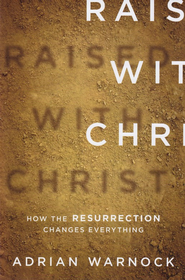
Of all the books I have read on the reality and the doctrine of the resurrection this is by far the best. Warnock presents a strong case for the resurrection's historicity as well as looks at its prediction in the Old Testament and the role it plays in the theology of the New Testament. This is an invaluable tool for every pastor certainly and it is written in a way that the average Christian could grasp.

N. T. Wright, The Resurrection of the Son of God
Though this is more of an academic work, it remains as one of the most thorough and important works on the resurrection of Christ. Its a thick volume (numbering at 740 pages), but virtually no rock is left unturned. Wright, as a theologian, has his weaknesses, but when it comes to this subject, Wright proves himself to be quite the scholar.

Steve Jeffery, Michael Ovey, and Andrew Sach, Pierced For Our Transgressions: Rediscovering the Glory of Penal substitution
This is the book to read regarding the doctrine of penal substitution. The authors tackle the biblical evidence and survey what theologians of the past have said regarding the doctrine. Perhaps most helpful is their critiquing common arguments against penal substitution like the more recent "divine child-abuse" blasphemy.

Mark Driscoll and Gerry Breshears, Death by Love: Letters from the Cross
In my opinion, every pastor should be aware of the contents of the book (though the first chapter is admittedly weak and problematic). The reason is because it forces ministers to view all of pastoral challenges as remedied by the cross. Each chapter reflects a unique challenge Driscoll has faced and ministry. He then writes a letter to those he is ministering to pointing them to the cross. Throughout the book, the authors apply the doctrines of redemption, propitiation, expiation, Christus Exemplar, and many others. This is an important model for pastors to always follow. Preach. The. Cross.
Others worth mentioning:
- John MacArthur, The Murder of Jesus
- Mark Dever and Lichael Lawrence, It is Well: Exposition on Substitutionary Atonement
- D. A. Carson, Scandalous: The Cross and Resurrection of Jesus
- Richard D. Phillips, ed., Precious Blood: The Atoning Work of Christ
- John Piper, Fifty Reasons Jesus Came to Die
- Mark Dever and J. I. Packer, In My Place Condemned He Stood: Celebrating the Glory of the Atonement
- R. C. Sproul, The Truth of the Cross
- James Beiby and Paul Eddy, eds The Nature of the Atonement: Four Views
Monday, September 14, 2015
4 Reasons the Cross is Central to Christianity
At the core of Christianity stands the cross. To most that might sound
too elementary but few Christians sitting in our pews have seriously
given it much thought beyond Passion week festivities. No other symbol
better represents what Christianity is than the cross. While preparing a
recent sermon series on the atonement, I sat and wondered what the
Bible has to say about the cross and precisely why it matters. Why, of
all available options (from a fish to to shepherd's staff) did early
Christianity choose the cross to represent them and us today? Is the
cross a mere symbol for the Christian or the root of Christianity? Is it
merely an event in human history or the crux of human history? If it is
the latter, then why? Below, then, are four truths of the cross that
show why the atonement is both central and necessary.
1. The Cross is God's Clearest Revelation of Himself
Often when reading Scripture, we approach it as a divine encyclopedia. If I want to know what the Bible says about pride, marriage, suffering, or election I simply open my Bible, highlight a number of verses and suddenly I know what the Bible says about a given subject.
This can be a dangerous and misguided approach to understanding Scripture. We rightly and justly believe that the Bible, all sixty-six books, is God's special revelation to man, however, the purpose and climax of Scripture is to how the Creator redeemed a fallen humanity and cursed cosmos. The Bible is not a collection of stories, it is a story. It is not about a series of characters, from Adam to John, but about its author.
Thus the cross stands as the central message of Scripture. The cross, then, is also a divine act of special revelation. We see God most clearly through the lens of the cross. At the cross we see God's sovereignty, providence, benevolence, justice, power, holiness, mercy, glory, transcendence, immanence, and victory. In short, any study of God - his essence, nature, attributes, etc. - would be incomplete without a study of the cross for at the cross God has made Himself known.
2. The Cross Personifies God's Love
Though highlighted in the first point, the subject of the cross and God's love deserves special attention. One should note that after the cross, God's love is repeatedly referred in the past tense or in direct reference to the cross. Consider the following few examples:
The point is to show how frequently the New Testament writers proclaim that God loved us (past tense) instead of loves us (present tense). The difference is important. By using the past tense, the apostles are not saying that God's love has ceased but instead reminding us that God's love is continually demonstrated by the cross. We need not doubt the depth of God's love when we approach the cross. God is love because God loved.
3. The Cross is the Means By Which God Saves Sinners
Clearly the cross is declared as the saving act of God toward sinners. Sinners are saved by Christ at the cross. To make this point, the New Testament authors utilize a number of motifs and images of salvation. Here are a few of those motif's and what redemptive doctrine is associated with it.
All of these images point to the central theme of Scripture that God has come down to save sinners. He is the justifier of the guilty, the liberator of slaves, and the adopted Father of spiritual orphans. He pays our ransom, redeems us of our sins, and reconciles us to Himself. And it all happens at the cross. There is no salvation, therefore, outside of the cross.
4. The Cross is the Standard of What it Means to be a Christian
In Matthew 16:21-25 an important four letter word is used by Jesus twice to make two very profound points. First, Jesus says He must go to the cross thus establishing its necessity. He could do nothing else and was incarnated for nothing else. This is why in verses 22-23 Jesus rebukes His well-intentioned disciple, Peter, for suggesting that Jesus could build His Kingdom without the cross. Jesus equates Peter's desire with that of Satan Himself. Jesus must go to the cross and it is important for Peter, the disciples, and us to know, embrace, and celebrate that.
In verses 24 and 25 Jesus uses the word again. If Jesus must go to the cross, he adds, then anyone who wishes to follow Him must likewise pick up their cross and follow Him. To where? To Calvary for sure. Thus for Jesus and the New Testament, what it means to be a Christian is summarized in the cross. A Christian is a follower of Christ. A follower is one who has counted the cost and picked up their cross and died with their Savior. Christians are described as having crucified the flesh (Galatians 5:24), we have died to our sins (Romans 6:1ff; 1 Corinthians 15:31; 1 Peter 2:24), and are living sacrifices (Romans 12:1).
The only saving Christ is a dying one. The only living Christian is a dead one.
Conclusion
This is why the cross matters. Though more reasons could be given (for example, the relationship between a theology of the cross and a Christian theology of suffering), the above represents the core of Christianity. At the cross we see God. At the cross we see our true selves. At the cross we are regenerated. The cross matters and stands at the center of God's story of redemption and our story as the redeemed. Preachers must, therefore, preach the cross as their only strength. Sinners must embrace the cross as their only hope. And church members must pick up their cross as their only way to live.
1. The Cross is God's Clearest Revelation of Himself
Often when reading Scripture, we approach it as a divine encyclopedia. If I want to know what the Bible says about pride, marriage, suffering, or election I simply open my Bible, highlight a number of verses and suddenly I know what the Bible says about a given subject.
This can be a dangerous and misguided approach to understanding Scripture. We rightly and justly believe that the Bible, all sixty-six books, is God's special revelation to man, however, the purpose and climax of Scripture is to how the Creator redeemed a fallen humanity and cursed cosmos. The Bible is not a collection of stories, it is a story. It is not about a series of characters, from Adam to John, but about its author.
Thus the cross stands as the central message of Scripture. The cross, then, is also a divine act of special revelation. We see God most clearly through the lens of the cross. At the cross we see God's sovereignty, providence, benevolence, justice, power, holiness, mercy, glory, transcendence, immanence, and victory. In short, any study of God - his essence, nature, attributes, etc. - would be incomplete without a study of the cross for at the cross God has made Himself known.
2. The Cross Personifies God's Love
Though highlighted in the first point, the subject of the cross and God's love deserves special attention. One should note that after the cross, God's love is repeatedly referred in the past tense or in direct reference to the cross. Consider the following few examples:
- John 3:16 - For God so loved the world that He gave His only begotten Son...
- Romans 5:8 - But God demonstrates His own love toward us, in that while we were yet sinners, Christ died for us.
- Romans 8:37 - But in all these things we overwhelmingly conquer through Him who loved us.
- Galatians 2:20 - I have been crucified with Christ; and it is no longer I who live, but Christ lives in me; and the life which I now live in the flesh I live by faith in the Son of God, who loved me and gave Himself up for me.
- Ephesians 2:4-5 - But God, being rich in mercy, because of His great love with which He loved us, even when we were dead in our transgressions, made us alive together with Christ (by grace you have been saved),
- Ephesians 5:2 - and walk in love, just as Christ also loved you and gave Himself up for us, an offering and a sacrifice to God as a fragrant aroma.
- 2 Thessalonians 2:16 - Now may our Lord Jesus Christ Himself and God our Father, who has loved us and given us eternal comfort and good hope by grace,
- Titus 3:4-5 - But when the kindness of God our Savior and His love for mankind appeared...
- 1 John 3:16 - We know love by this, that He laid down His life for us...
- 1 John 4:9-11 - By this the love of God was manifested in us, that God has sent His only begotten Son into the world so that we might live through Him. In this is love, not that we loved God, but that He loved us and sent His Son to be the propitiation for our sins. Beloved, if God so loved us, we also ought to love one another.
- 1 John 4:19 - We love, because He first loved us.
The point is to show how frequently the New Testament writers proclaim that God loved us (past tense) instead of loves us (present tense). The difference is important. By using the past tense, the apostles are not saying that God's love has ceased but instead reminding us that God's love is continually demonstrated by the cross. We need not doubt the depth of God's love when we approach the cross. God is love because God loved.
3. The Cross is the Means By Which God Saves Sinners
Clearly the cross is declared as the saving act of God toward sinners. Sinners are saved by Christ at the cross. To make this point, the New Testament authors utilize a number of motifs and images of salvation. Here are a few of those motif's and what redemptive doctrine is associated with it.
- The Court - God declares the guilty righteous (justification)
- The Shrine - the wrath of God is satisfied (propitiation) and the sinner is cleansed (expiation)
- The Home - God's sets us right with Him (reconciliation)
- The Orphanage - God adopts sinners as sons and daughters (adoption)
- The Battlefield - God defeats the enemy and peace is declared (Liberation)
- The Market - God sets the slaves free (redemption) and all our debts are paid in full (ransom)
All of these images point to the central theme of Scripture that God has come down to save sinners. He is the justifier of the guilty, the liberator of slaves, and the adopted Father of spiritual orphans. He pays our ransom, redeems us of our sins, and reconciles us to Himself. And it all happens at the cross. There is no salvation, therefore, outside of the cross.
4. The Cross is the Standard of What it Means to be a Christian
In Matthew 16:21-25 an important four letter word is used by Jesus twice to make two very profound points. First, Jesus says He must go to the cross thus establishing its necessity. He could do nothing else and was incarnated for nothing else. This is why in verses 22-23 Jesus rebukes His well-intentioned disciple, Peter, for suggesting that Jesus could build His Kingdom without the cross. Jesus equates Peter's desire with that of Satan Himself. Jesus must go to the cross and it is important for Peter, the disciples, and us to know, embrace, and celebrate that.
In verses 24 and 25 Jesus uses the word again. If Jesus must go to the cross, he adds, then anyone who wishes to follow Him must likewise pick up their cross and follow Him. To where? To Calvary for sure. Thus for Jesus and the New Testament, what it means to be a Christian is summarized in the cross. A Christian is a follower of Christ. A follower is one who has counted the cost and picked up their cross and died with their Savior. Christians are described as having crucified the flesh (Galatians 5:24), we have died to our sins (Romans 6:1ff; 1 Corinthians 15:31; 1 Peter 2:24), and are living sacrifices (Romans 12:1).
The only saving Christ is a dying one. The only living Christian is a dead one.
Conclusion
This is why the cross matters. Though more reasons could be given (for example, the relationship between a theology of the cross and a Christian theology of suffering), the above represents the core of Christianity. At the cross we see God. At the cross we see our true selves. At the cross we are regenerated. The cross matters and stands at the center of God's story of redemption and our story as the redeemed. Preachers must, therefore, preach the cross as their only strength. Sinners must embrace the cross as their only hope. And church members must pick up their cross as their only way to live.
Thursday, March 19, 2015
My Hope: America - The Cross
Last night I highlighted the film the students were watching featuring Billy Graham Called My Hope: America - The Cross. I had a few members ask about the thirty minute video which I believe is very powerful. It is available for free online and I have embedded it below. In addition to it, the Billy Graham Evangelistic Association produced other, similar videos that are well worth your time. I will post them below as well.
The Cross
Defining Moments
Lose to Gain
Heaven
The Cross
Defining Moments
Lose to Gain
Heaven
Subscribe to:
Posts (Atom)