Sunday evening we finished our brief series on spiritual warfare. You can access both sermons at the bottom of this post. In light of that, I want to pass along a number of helpful resources on the subject that will allow you to explore the subject in more detail.
Did the Devil Make Me Do It? by Mike McKinley
This short volume is part of the the "Questions Christians ask" book series published by The Good Book Company. Like the other books in this series, the author offers a simple and precise introduction to the subject at hand. This book is brief and helpfully summarizes the question of spiritual warfare. This volume is not long enough to answer every question you may have, but if you are new to the subject, I recommend you start here.
3 Crucial Questions about Spiritual Warfare by Clinton Arnold
The
best book I have read on the subject of spiritual warfare is Clinton
Arnold's work. It is part of the Three Crucial Questions series.
Although its structure is centered around three questions: What is
Spiritual Warfare?, Can a Christian Be Demon-Possessed?, Are We Called
to Engage Territorial Spirits?, the book explores much more than this.
Arnold offers a much more thorough exploration of spiritual warfare.
Screwtape Letters by CS Lewis
Lewis is one of my favorite writers of the 20th century. In this work, the late apologists imagines a series of letters from senior demon Uncle Screwtape to his apprentice nephew Wormwood on how to tempt his Christian subject. In my opinion, Screwtape Letters is one of those books that every Christian should read and reread throughout their lives.
Discipled Warriors: Growing Healthy Churches That Are Equipped for Spiritual Warfare by Chuck Lawless
I will admit up front that I have not sat down and read this book cover to cover. Not yet at least. But have interacted with Dr. Lawless personally (he taught at SBTS) and have followed much of his teachings on spiritual warfare. I suspect that he is one of the most influential voices on spiritual warfare among Baptists today. This is his primary work and was followed by the book Putting on the Armor: Equipped and Deployed for Spiritual Warfare.
For more:
February 5, 2017 | On Spiritual Warfare, Part 1
February 19, 2017 | On Spiritual Warfare, Part 2

Showing posts with label books. Show all posts
Showing posts with label books. Show all posts
Friday, February 24, 2017

Tuesday, February 14, 2017
Recommend Reading on Marriage and Relationships
In case you didn't know, today is Valentine's Day (hint hint fellas). Since today is the national day of love, I want to recommend a number of helpful resources on marriage and romantic relationships. The following is not an exhaustive list but is a good start. The main thing is to continue to work on your marriage.
When Sinners Say "I Do": Discovering the Power of the Gospel for Marriage by Dave Harvey
This is, without a doubt, one of the best books on marriage and relationships I have read in recent years. The premise of the book is identified in the title: marriage is the uniting of two sinners. What lies at the root of every problem every couple faces is sin. Both sides are guilty of sin. The key to a lasting, healthy, and vibrant marriage, then, is the gospel. Harvey walks us through this unlike any other marriage book does. I strongly recommend this work.
His Needs, Her Needs: Building an Affair-Proof Marriage by Willard Harley
The premise of this book is simple. Men and women are different. The author walks the reader through the five needs of both the husband and wife and how each spouse should serve the other. In principle, it is gospel. If my focus is on meeting the needs of my spouse rather than being consumed with my spouse meeting mine, then our marriage will thrive. This is the model set forth by Paul in Ephesians 5.
The Meaning of Marriage: Facing the Complexities of Commitment with the Wisdom of God by Timothy and Kathy Keller
Tim Keller is one of the best writers and thinkers of our day. Here he and his wife apply his wit and wisdom to marriage. Its worth investing in and includes a fuller treatment of what the Bible says about marriage.
Love & Respect: The Love She Most Desires; The Respect He Desperately Needs by Emerson Eggerichs
Again the premise is simple. Men and women are different. At our core, each have one basic need. women need love and men need respect. The writer walks the reader through how each gender understand those terms and what role they play in marriage and how we can serve the other the right way. This is not my favorite book, but it remains popular and helpful for many couples.
When Sinners Say "I Do": Discovering the Power of the Gospel for Marriage by Dave Harvey
This is, without a doubt, one of the best books on marriage and relationships I have read in recent years. The premise of the book is identified in the title: marriage is the uniting of two sinners. What lies at the root of every problem every couple faces is sin. Both sides are guilty of sin. The key to a lasting, healthy, and vibrant marriage, then, is the gospel. Harvey walks us through this unlike any other marriage book does. I strongly recommend this work.
His Needs, Her Needs: Building an Affair-Proof Marriage by Willard Harley
The premise of this book is simple. Men and women are different. The author walks the reader through the five needs of both the husband and wife and how each spouse should serve the other. In principle, it is gospel. If my focus is on meeting the needs of my spouse rather than being consumed with my spouse meeting mine, then our marriage will thrive. This is the model set forth by Paul in Ephesians 5.
The Meaning of Marriage: Facing the Complexities of Commitment with the Wisdom of God by Timothy and Kathy Keller
Tim Keller is one of the best writers and thinkers of our day. Here he and his wife apply his wit and wisdom to marriage. Its worth investing in and includes a fuller treatment of what the Bible says about marriage.
Love & Respect: The Love She Most Desires; The Respect He Desperately Needs by Emerson Eggerichs
Again the premise is simple. Men and women are different. At our core, each have one basic need. women need love and men need respect. The writer walks the reader through how each gender understand those terms and what role they play in marriage and how we can serve the other the right way. This is not my favorite book, but it remains popular and helpful for many couples.
Friday, February 3, 2017
Recommended Reading on Spiritual Warfare
Sunday evening we will be exploring the challenging subject of spiritual warfare. In light of that, I want to pass along a number of helpful resources on the subject that will allow you to explore the subject in more detail.
Did the Devil Make Me Do It? by Mike McKinley
This short volume is part of the the "Questions Christians ask" book series published by The Good Book Company. Like the other books in this series, the author offers a simple and precise introduction to the subject at hand. This book is brief and helpfully summarizes the question of spiritual warfare. This volume is not long enough to answer every question you may have, but if you are new to the subject, I recommend you start here.
Screwtape Letters by CS Lewis
Lewis is one of my favorite writers of the 20th century. In this work, the late apologists imagines a series of letters from senior demon Uncle Screwtape to his apprentice nephew Wormwood on how to tempt his Christian subject. In my opinion, Screwtape Letters is one of those books that every Christian should read and reread throughout their lives.
3 Crucial Questions about Spiritual Warfare by Clinton Arnold
The best book I have read on the subject of spiritual warfare is Clinton Arnold's work. It is par tof the Three Crucial Questions series. Although its structure is centered around three questions: What is Spiritual Warfare?, Can a Christian Be Demon-Possessed?, Are We Called to Engage Territorial Spirits?, the book explores much more than this. Arnold offers a much more thorough exploration of spiritual warfare.
Did the Devil Make Me Do It? by Mike McKinley
This short volume is part of the the "Questions Christians ask" book series published by The Good Book Company. Like the other books in this series, the author offers a simple and precise introduction to the subject at hand. This book is brief and helpfully summarizes the question of spiritual warfare. This volume is not long enough to answer every question you may have, but if you are new to the subject, I recommend you start here.
Screwtape Letters by CS Lewis
Lewis is one of my favorite writers of the 20th century. In this work, the late apologists imagines a series of letters from senior demon Uncle Screwtape to his apprentice nephew Wormwood on how to tempt his Christian subject. In my opinion, Screwtape Letters is one of those books that every Christian should read and reread throughout their lives.
3 Crucial Questions about Spiritual Warfare by Clinton Arnold
The best book I have read on the subject of spiritual warfare is Clinton Arnold's work. It is par tof the Three Crucial Questions series. Although its structure is centered around three questions: What is Spiritual Warfare?, Can a Christian Be Demon-Possessed?, Are We Called to Engage Territorial Spirits?, the book explores much more than this. Arnold offers a much more thorough exploration of spiritual warfare.
Friday, January 13, 2017
Recommended Reading on Personal Evangelism
Our vision for 2017 is to incorporate both Corporate and Personal Evangelism in our outreach. This means that both the church and its members are committed to reaching into our community with the gospel. It is my experience that most Christians are much more comfortable engaging in corporate outreach as opposed to personal evangelism. The latter can be frightening. Therefore, I want to highlight a number of helpful resources on personal evangelism that may guide us this year.
How to Give Away Your Faith by Paul E. Little
This is one of the most accessible and easy to use guide. Little walks the reader through the ins and outs of personal evangelism. If you invest in only one resource, this is perhaps the best. It is both biblical and practical and was required reading for all seminary students at SBTS.
The Art of Personal Evangelism: Sharing Jesus in a Changing Culture by Will McRaney
This work is growing in popularity and may even be rivaling Little's volume highlighted above. It is more detailed and not as accessible but is just as helpful especially when it comes to understanding our cultural context.
The Gospel and Personal Evangelism by Mark Dever
This is a helpful introductory work on evangelism. Dever walks the reader through what the gospel is, why we should share the gospel, and how to practically do it.
The Master Plan of Evangelism by Robert Coleman
This is another classic read by all seminary students at SBTS. Coleman's approach is to study how Jesus trained the disciples and then sent them out into the world to do the same. It is a short but powerful book.
Life On Mission: Joining the Everyday Mission of God by Dustin Willis and Aaron Coe
The "Life on Mission" track introduced us to the 3 Circles which is a simple way to explain the gospel. The idea is that it can be written on a restaurant napkin. It is the method I have used at EFBC to explain and explore the gospel with those ready to receive it. In this volume, the authors walk the reader primarily through the importance of living evangelistic lives, i.e., lives on mission.
For more:
Recommended Reading on Idolatry
How to Give Away Your Faith by Paul E. Little
This is one of the most accessible and easy to use guide. Little walks the reader through the ins and outs of personal evangelism. If you invest in only one resource, this is perhaps the best. It is both biblical and practical and was required reading for all seminary students at SBTS.
The Art of Personal Evangelism: Sharing Jesus in a Changing Culture by Will McRaney
This work is growing in popularity and may even be rivaling Little's volume highlighted above. It is more detailed and not as accessible but is just as helpful especially when it comes to understanding our cultural context.
The Gospel and Personal Evangelism by Mark Dever
This is a helpful introductory work on evangelism. Dever walks the reader through what the gospel is, why we should share the gospel, and how to practically do it.
The Master Plan of Evangelism by Robert Coleman
This is another classic read by all seminary students at SBTS. Coleman's approach is to study how Jesus trained the disciples and then sent them out into the world to do the same. It is a short but powerful book.
Life On Mission: Joining the Everyday Mission of God by Dustin Willis and Aaron Coe
The "Life on Mission" track introduced us to the 3 Circles which is a simple way to explain the gospel. The idea is that it can be written on a restaurant napkin. It is the method I have used at EFBC to explain and explore the gospel with those ready to receive it. In this volume, the authors walk the reader primarily through the importance of living evangelistic lives, i.e., lives on mission.
For more:
Recommended Reading on Idolatry
Wednesday, January 4, 2017
Recommended Reading on Idolatry
Sunday morning we talked a lot about idolatry in the context of the third soil in Jesus's Parable of the Soils which discussed the sinful hearer. The issue of idolatry is an important topic that Christians would do well to understand. From my experience, many Christians fall prey to false worship and obedience to a false god without even knowing it. Thus, I want to recommend two really good resources that deal with the struggle of idolatry that are accessible.
Tim Keller, Counterfeit Gods: The Empty Promises of Money, Sex, and Power, and the Only Hope that Matters
One of the most important and penetrating writers of our day is Tim Keller. He is a church planter in New York whose ministry is world wide. He is a helpful voice in matters of apologetics and theology. He has been very influential to me. In this book, Keller unveils the false promises of idols and how Jesus is better in his unique style. If you only read one book on idolatry, I would recommend this one.
Kyle Idleman, Gods at War: Defeating the Idols that Battle For Your Heart
Kyle Idlman currently serves as a teaching pastor at Louisville's Southeast Christian Church. This work is probably more accessible than Keller's and is unique among books like it in that he dedicates a chapter to gluttony. But like Keller's volume, he shows that idolatry is dangerous and we must declare war against them.
Tim Keller, Counterfeit Gods: The Empty Promises of Money, Sex, and Power, and the Only Hope that Matters
One of the most important and penetrating writers of our day is Tim Keller. He is a church planter in New York whose ministry is world wide. He is a helpful voice in matters of apologetics and theology. He has been very influential to me. In this book, Keller unveils the false promises of idols and how Jesus is better in his unique style. If you only read one book on idolatry, I would recommend this one.
Kyle Idleman, Gods at War: Defeating the Idols that Battle For Your Heart
Kyle Idlman currently serves as a teaching pastor at Louisville's Southeast Christian Church. This work is probably more accessible than Keller's and is unique among books like it in that he dedicates a chapter to gluttony. But like Keller's volume, he shows that idolatry is dangerous and we must declare war against them.
Thursday, July 28, 2016
The Secular vs the Sacred: Brand on the Influence of Luther
This upcoming Sunday we will continue our study of Exodus and will highlight the important issue of how the gospel break's down the secular/sacred divide. In anticipation of that, I want to pass along the following quote from Dr. Chad Owen Brand who
gives us a historic and theological perspective in the context of work in his book Flourishing Faith.
Today we do something similar. Many feel that unless they are in vocational ministry (as pastor, youth minister, seminary professor, evangelists, etc.) they are not called to ministry. That does not reflect Luther's reform or his theology of the priesthood of believers. The minister, in reality, is a minister of ministers for we are all called. Serve where God has you to His glory.
A great example of this is William Wilberforce. After his conversion to Christianity, Wilberforce struggled with his public service. Can one be a consistent Christian while working in parliament. The hymn writer John Newton (most famous for the hymn "Amazing Grace") encouraged him to stay in Parliament for the very reasons articulated above by Dr. Brand about the theology of Martin Luther.
Wilberforce continued to serve the Lord as a politician and led the fight for the abolition of the slave trade in England.
In 1517 an Augustinian monk in Saxony (Germany) sparked off a theological debate that grew into the movement we now call the Protestant Reformation. Luther’s major slogan was ‘justification by faith alone,’ but a corollary of that, and a point Luther made w/ almost as much ferocity as he did justification, was the idea that all Christians have a vocation (vocatio in Latin), that all Christians are divinely called. Whether one is a farmer, a banker, a scholar, a priest, or a merchant, Luther believed that all are callings from God and that the calling to a ‘secular’ vocation is just as holy as a calling to a ‘sacred vocation. Indeed, the distinction between sacred and secular becomes very blurred in Luther’s theology. In effect, this notion of vocation did more to elevate the field of ‘business’ than anyone might have thought possible. R. H. Murray in his book, The Political Consequences of the Reformation, offered this comment: ‘The “Saint’s Rest” was in the world to come: in this [world] he was a labor at his calling. Business henceforth became a sacred office in which it was man’s bounden duty to do his utmost ad majorem Dei gloriam [to the greatness of God’s glory].’ Labor glorifies God, and it is in that sense that every calling is a calling from God. In Catholicism the workplace could not have been seen as sacred (at that time), since only the communion of the saints in heaven is sacred. Luther had brought heaven down to earth.Let us not overlook the culture in which Luther lived. Only the priests could partake in the drinking of the transubstantiated blood of Christ (in the wine). The laity were only allowed to partake in the eating of the bread. This set the two classes, the sacred from the secular, apart giving the impression that in the eyes of God, the priests were holier, better, and more righteous. Luther tore that down in his reform.
Connected to this is Luther’s doctrinal conviction that all Christians are priests unto God (1 Peter 2:9). Luther did not diminish the important of the role of ‘pastor,’ but instead leveled the playing field, making that calling but one calling in the life of Christian people. All believers are priests, which means that all believers have the responsibility of serving one another in ministry. This preaching did not have the immediate effect of harnessing a vast lay movement toward ministry, but in the generations that followed a movement in Lutheranism called Pietism would seize on these ideas and witness a lay revival movement that empowered people in ‘secular’ employment to use their gifts and calling to serve the church. Luther’s doctrine of the priesthood of all believers would also spill over into later Baptist and Methodist circles, evangelical denominations that emphasized even more than Lutheranism that all are called into God’s service.
Luther’s reform initiative would eventually swallowed up large parts of Western Europe (including England) after his public stand before the emperor and the papacy at the Diet (Congress) of Worms in 1521. There, Luther, in defiance of the established powers in his part of the world proclaimed, ‘Here I stand. I cannot do otherwise. God help me. Amen.’ The Reformation was on, and it would, over time, completely transform the way Europeans thought about church, theology, politics, and work.” (17-18)
Today we do something similar. Many feel that unless they are in vocational ministry (as pastor, youth minister, seminary professor, evangelists, etc.) they are not called to ministry. That does not reflect Luther's reform or his theology of the priesthood of believers. The minister, in reality, is a minister of ministers for we are all called. Serve where God has you to His glory.
A great example of this is William Wilberforce. After his conversion to Christianity, Wilberforce struggled with his public service. Can one be a consistent Christian while working in parliament. The hymn writer John Newton (most famous for the hymn "Amazing Grace") encouraged him to stay in Parliament for the very reasons articulated above by Dr. Brand about the theology of Martin Luther.
Wilberforce continued to serve the Lord as a politician and led the fight for the abolition of the slave trade in England.
Monday, April 25, 2016
Book Recommendation - "Joseph and the Gospel of Many Colors" by Voddie Baucham
Ironically, it is the dramatic nature of Joseph's story, coupled with our addiction to heroic character arcs and story lines, that make it difficult to interpret this well-worn narrative properly. Our tendency is to look at the story in isolation as though it were one of Aesop's fables with a moral at the end: “Let ’em hate you. If you’re faithful, you’ll end up rich, powerful, and vindicated.” However, this interpretation not only misses the mark, it also perverts the very message of the narrative in particular, and the Bible in general. Joseph is not a mere example of what awaits us if we’re “good enough.” His story, like every story in the Bible, is part of the broader redemptive narrative designed to cause us to recognize the glory of our great God.

We all know the story of Joseph - the favorite son of the last Jewish patriarch betrayed and sold into slavery by his own brothers only to rise to save them from starvation - and that is both a blessing and a curse. It is a blessing because it is a central story of Scripture that unfolds God's ultimate plan of redemption. It is a curse because, like the many other well-known stories (like David and Goliath, Jonah, Moses, Abraham, and the miracles of Jesus), we have a tendency to moralize the narrative. In his new book Joseph and the Gospel of Many Colors (Crossway, 2013), Dr. Voddie Baucham shows how to read the the story of Jacob's favorite son with redemption, and not moralism, in mind.
The book begins with a helpful introduction and first chapter that lays out the issues. Baucham explains what his book is not (a commentary, a sermon series turned into a book, etc.) and what the book is. Any believer, pastor, or scholar looking for an in-depth study of the story of Joseph will be disappointed, but anyone looking to apply a redemptive hermeneutic to one of the Bible's most beloved characters will be blessed.
In the first chapter Baucham rightly blasts our natural tendency to moralize the Bible. He returns to this exhortation throughout the book showing how exegetically it does not work. For example, when Joseph literally flees sexual temptation from Potipher's wife, it is tempting to interpret the text morally revealing how we ought to respond to sexual temptation. The problem, however, is the stories conclusion: Joseph is arrested and put in jail. Moralism depends on a happy ending otherwise the moral of the story makes no sense.
Key to Baucham's redemptive hermeneutic is the theme of seed, land, and covenant. The author walks the reader through this argument in an extremely helpful chapter on how to understand the Bible in general and Genesis in particular. Chapter 2, where this theme is discussed, is worth the price of the book itself.
From here, the author surveys the narrative of Joseph mostly highlighting two chapters at a time almost always returning to the theme of seed, land, and covenant. Like a good pastor, Bauchman explains any textual difficulties and background information necessary, but he certainly does not dwell on any of these unless he is forced to. Again, this is not a scholarly treatment of the story nor a commentary. Bauchman remains focused in showing what the story of Joseph has to do with the gospel.
Perhaps an example of how Bauchman applies the three themes of seed, land, and covenant might be helpful. In his chapter on Genesis 37-38, the author writes:
The significance of Judah's marriage is threefold. First, we have already seen how important the marriages of their children are to be the patriarchs. Abraham made his servant swear that he would "not take a wife for [his] son from the daughters of the Canaanites" (Gen. 24:3). Now we find Judah, the next in the line of the Promised Seed, doing presently that. This raises questions about the seed.Baucham's approach has forced me to go back over the story itself and look more closely for these themes which has been extremely helpful to me. The significance of the Judah story here, as the author points out, is that though Joseph might be the main character in the closing chapters of Genesis, he is not its central character: Jacob and Judah are. Judah becomes the promised seed, not Joseph, and it is Judah that learns to lead after his own repentance and it is upon his offspring (his seed) that Jacob makes his messianic promise.
Second, not only does Judah end up with a Canaanite, but he "went down from his brothers and turned aside." This raises questions about the land. Judah wasn't sold into slavery. nor was he advancing the patriarch's acquisition of territory. No one forced him to abandon the Land of Promise; he simply departed on his own. This is an amazing juxtaposition.
Third, the narrative makes it clear that Judah has not just left for a short while. He is among the Canaanites long enough for the woman to conceive three times. Even if she was exceptionally fertile, this took at least two-and-a-half to three years. How could Judah have been raised by the last of the patriarchs, tasted the Land of Promise, and decided to "turn aside" to live among the Canaanites? This raises questions about the covenant. Is Judah part of the covenant people of God? Of course, this question will be answered later. Nevertheless, the point is clear: Moses is showing how far Judah has fallen. (54)
This is the pattern of the book. Though I felt that Baucham could have made more direct connections with Christ and His passion, Baucham illustrates for us how faithful exegesis leads naturally to redemption. He is always careful not to allegorize in his effort to reveal its redemptive nature common among those with a redemptive hermeneutic of the Old Testament.
One opportunity Baucham missed regards Genesis 49:10. The NASB makes mention of a mysterious "Shiloh" whereas the ESV, the translation Baucham uses, translates using the word "tribute." I prefer the NASB as it forces the reader to see the messianic connection more clearly. This difference of translation, something Baucham does not mention, leads to him ignoring it. He does well in emphasizing the metaphor of a lion and a king, but fails to see the messianic prophecy here.
Overall, however, this is a helpful book for any reader of Scripture. Though a concluding chapter tying everything together would have been beneficial, Bauchman succeeds in guiding the reader to seeing redemption in one of the Bible's most known stories.
This book was provided for the purpose of this review by its publisher, Crossway Books.
Thursday, July 2, 2015
For Further Study: Spiritual Disciplines
Last night we started a new series studying the spiritual disciplines. There are two books I recommended and I want to pass them along here.

1. Spiritual Disciplines for the Christian Life by Dr. Donald Whitney
The one book I would recommend on the subject of spiritual disciplines would be this one from Dr. Whitney. The author is a professor at Southern Seminary is most known for this book. If you invest in just one book, invest in this one. Other books by Whitney on spiritual disciplines include Spiritual Disciplines within the Church: Participating Fully in the Body of Christ, Simplify Your Spiritual Life: Spiritual Disciplines for the Overwhelmed, and 10 Questions to Diagnose Your Spiritual Health.

2. Celebration of Discipline by Richard Foster
I have read through Foster's work a few times now and I do recommend it. It is a helpful guide to growing in the spiritual disciplines. With that said, I would encouragement discernment on certain parts of the book especially his chapter on prayer and his flirtation with mysticism.
This should get you started. Ultimately, those Christians who live by a strong faith are those who invest in the spiritual disciplines.
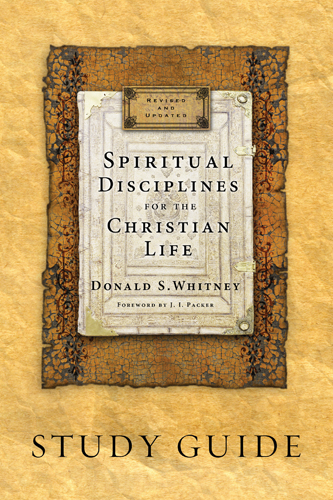
1. Spiritual Disciplines for the Christian Life by Dr. Donald Whitney
The one book I would recommend on the subject of spiritual disciplines would be this one from Dr. Whitney. The author is a professor at Southern Seminary is most known for this book. If you invest in just one book, invest in this one. Other books by Whitney on spiritual disciplines include Spiritual Disciplines within the Church: Participating Fully in the Body of Christ, Simplify Your Spiritual Life: Spiritual Disciplines for the Overwhelmed, and 10 Questions to Diagnose Your Spiritual Health.
2. Celebration of Discipline by Richard Foster
I have read through Foster's work a few times now and I do recommend it. It is a helpful guide to growing in the spiritual disciplines. With that said, I would encouragement discernment on certain parts of the book especially his chapter on prayer and his flirtation with mysticism.
This should get you started. Ultimately, those Christians who live by a strong faith are those who invest in the spiritual disciplines.
Subscribe to:
Posts (Atom)